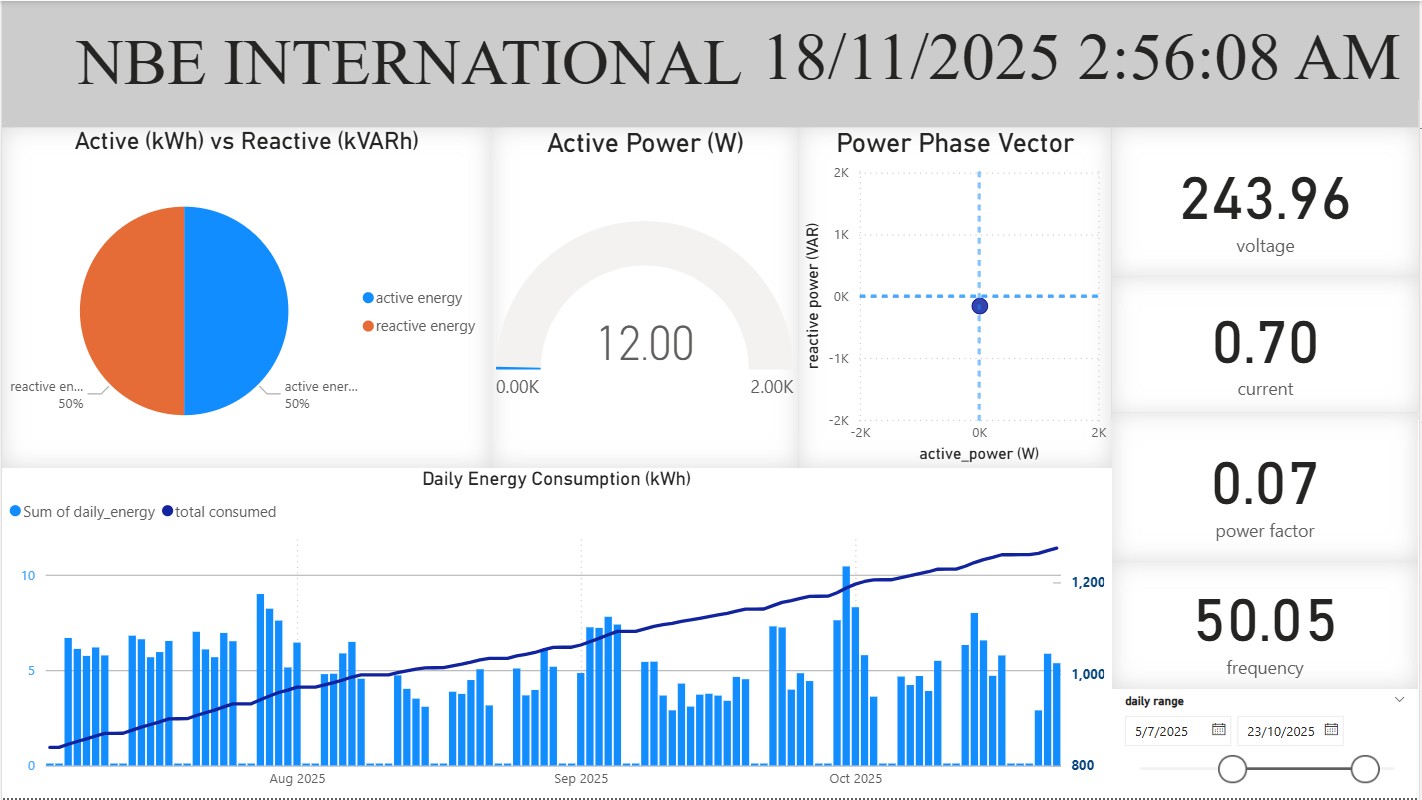
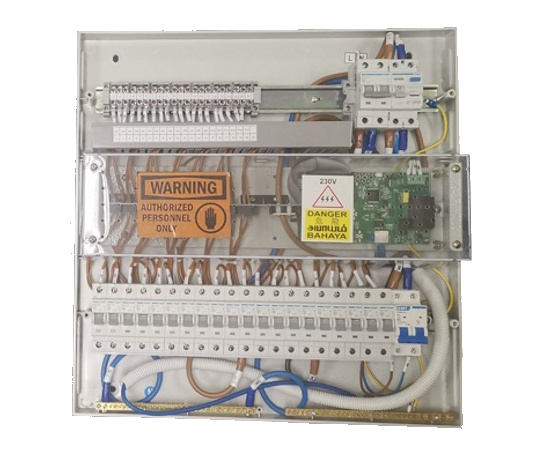
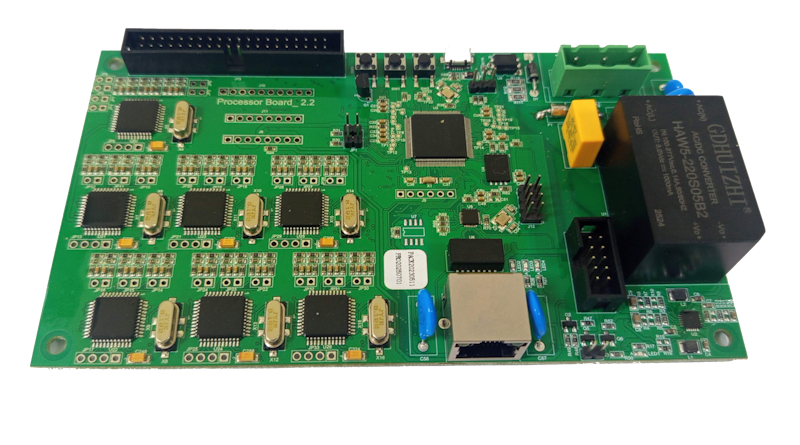
NBE designs energy metering processing units (MPU) and scalable monitoring architectures for distribution boards and field deployments. Built for reliable parameter computation, industrial integration, and cloud reporting.
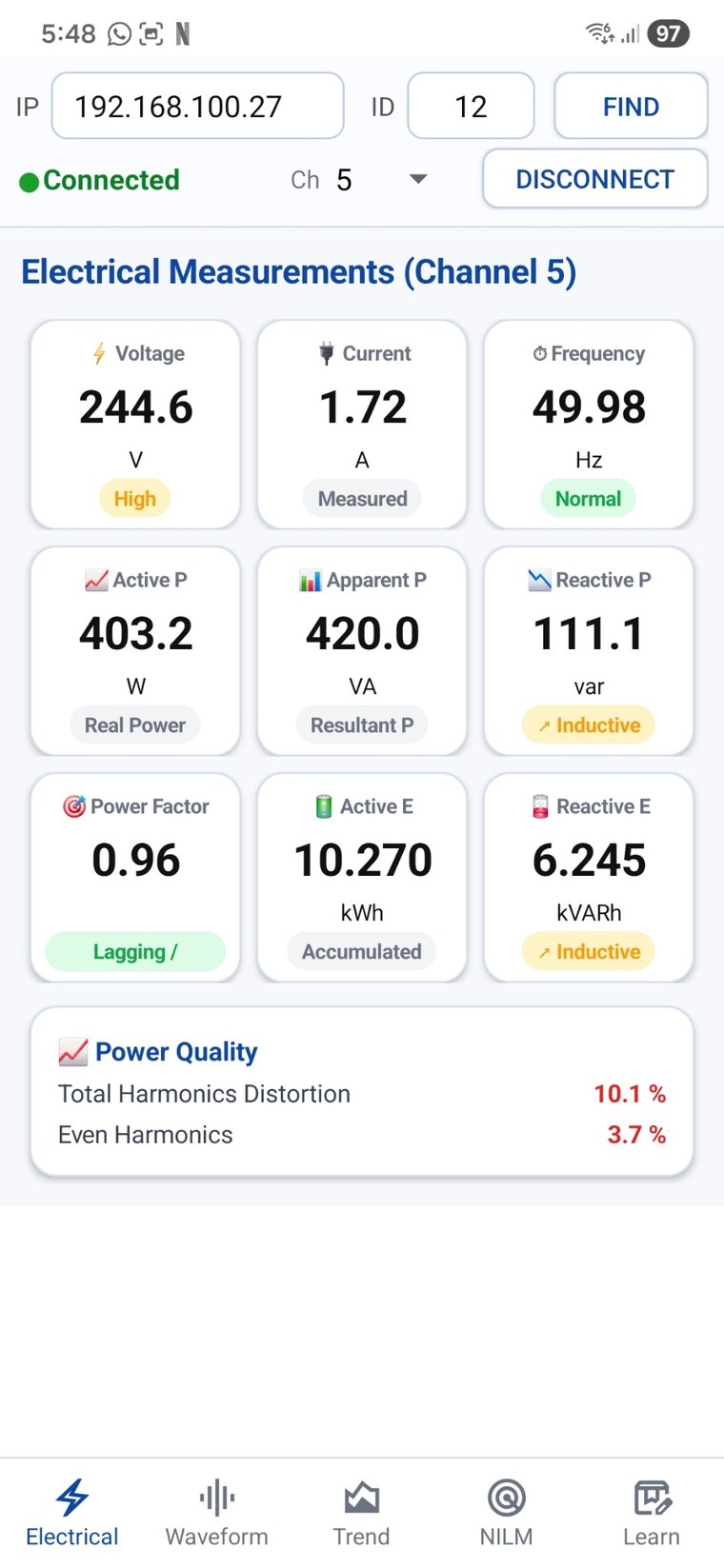
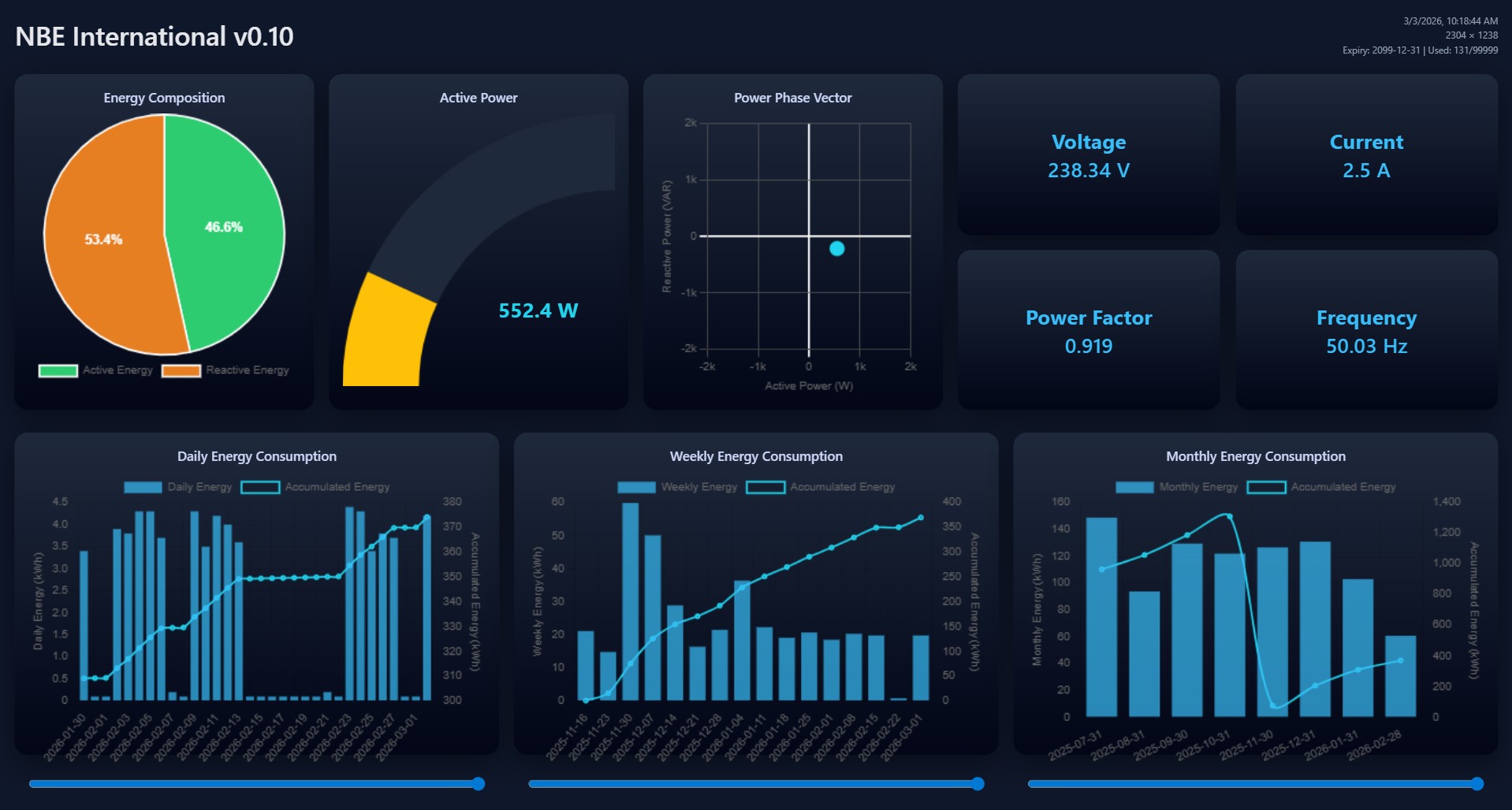
Voltage, Current, Frequency, Power Factor, Active Power, Reactive Power, Apparent Power, Active Energy, Reactive Energy, Apparent Energy.
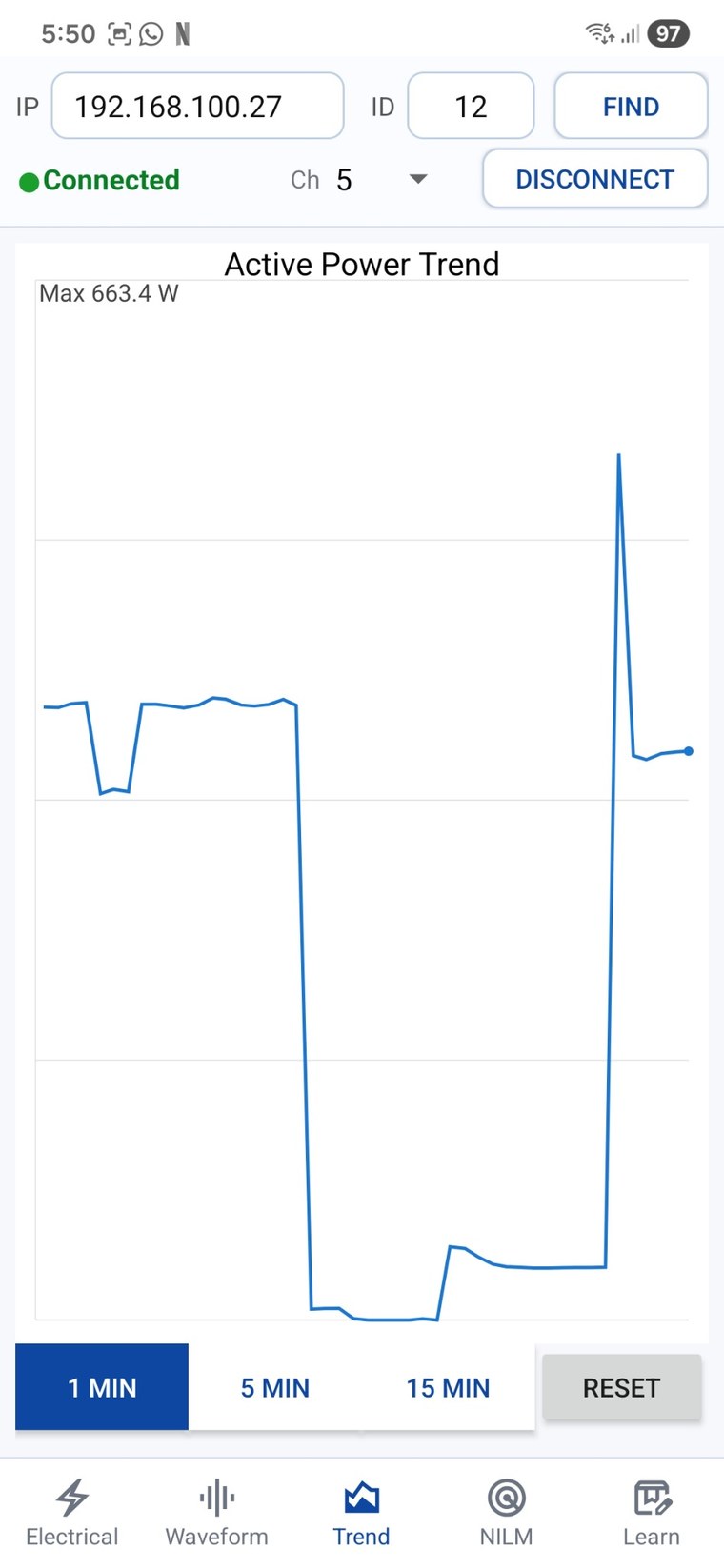
Output is suitable for dashboards, trend analysis, alerts, and industrial integration.
Scalable from single-phase monitoring to multi-channel three-phase deployments for commercial and industrial distribution boards. Suitable for sub-metering, feeder monitoring, and circuit-level measurement architecture.
Defines accuracy requirements for active energy measurement. Class 1 commonly corresponds to 1% accuracy under specified test conditions.
Defines performance and test requirements for instrument-transformer-based measurement chains such as current transformers (CT).
A standards-aligned metering chain gives confidence that the system is engineered using proven test methods, measurement practices, and accuracy expectations.
Certificate of Conformity with IEC 61869-1, IEC 61869-2, and IEC 62053-21, aligned with Class 1 measurement requirements (commonly referenced as ~1% active energy accuracy).
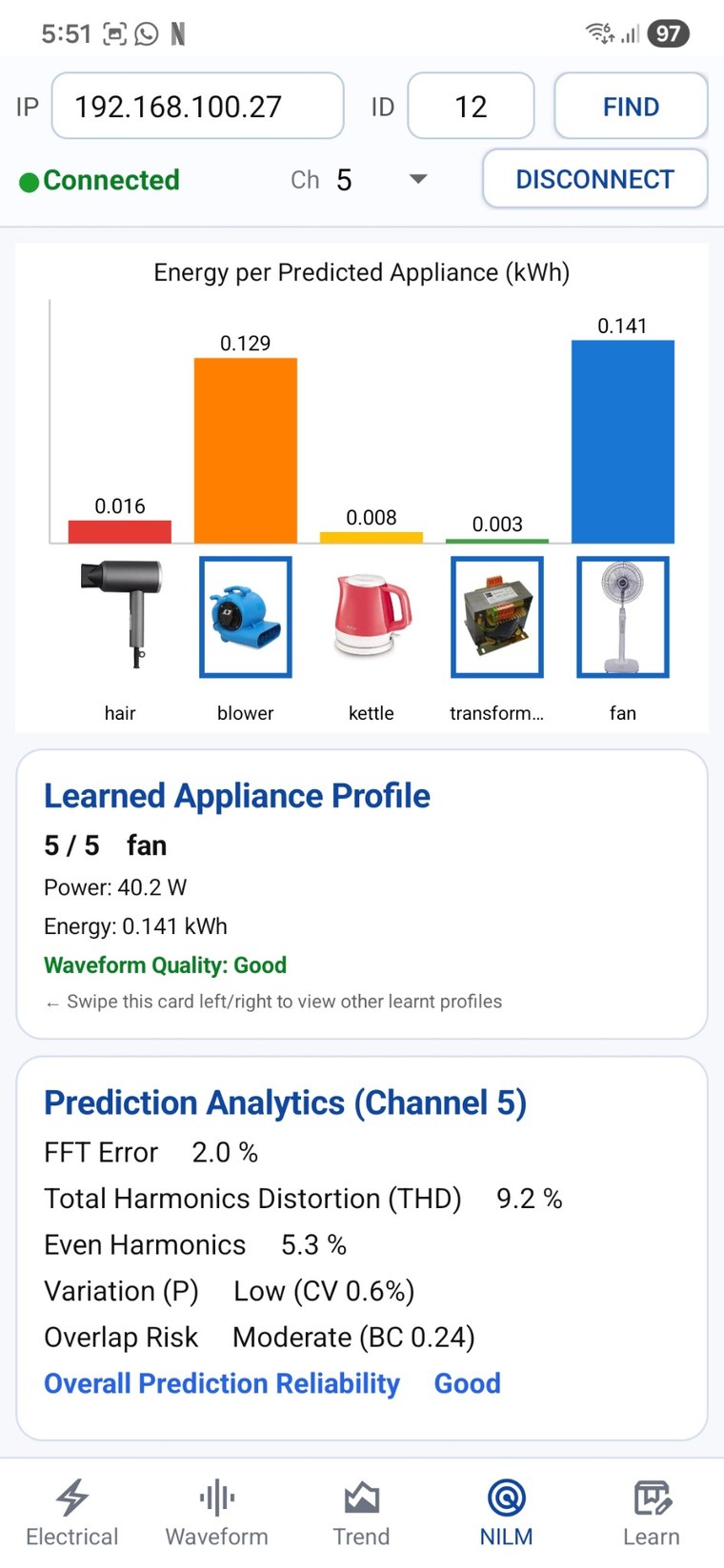
Designed for advanced integration and extensibility. Suitable for technical users and system integrators who may want to integrate custom software modules, protocol gateways, or edge applications.
Designed for hardened, standalone metering deployments. Optimized for long-term reliability and deterministic real-time operation. No user-side software integration is required.
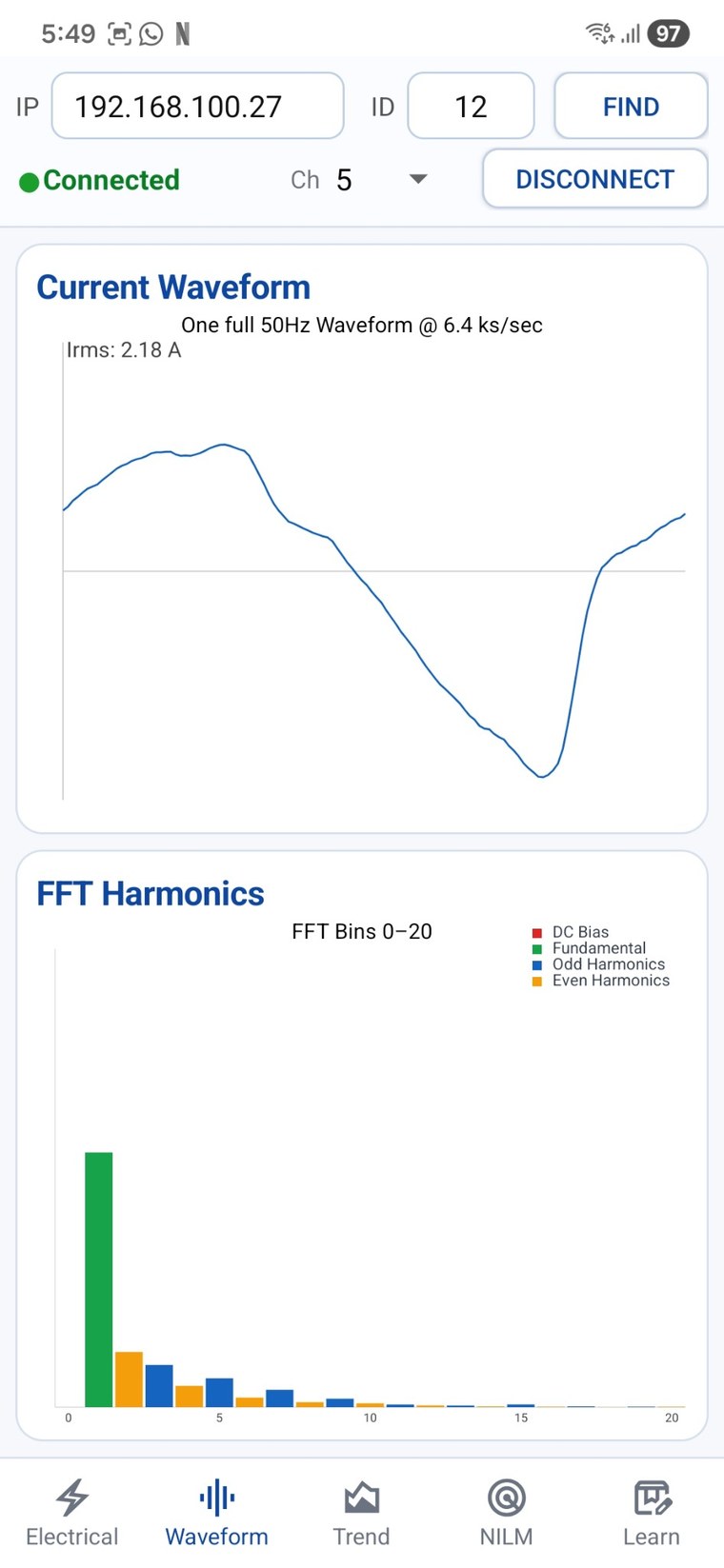
The metering engine continuously samples the voltage and current waveforms at high resolution for stable computation, while providing a practical real-time update rate for dashboards.
6.4 kHz waveform acquisition for detailed computation and event visibility.
4 Hz telemetry update for near real-time dashboard and monitoring.
Reactive power is computed from fast waveform sampling using phase information extracted through a Hilbert transform technique, enabling stable quadrature component estimation and more accurate reactive measurement under real-world load conditions.
This approach is particularly useful when loads are dynamic and waveform characteristics vary over time.
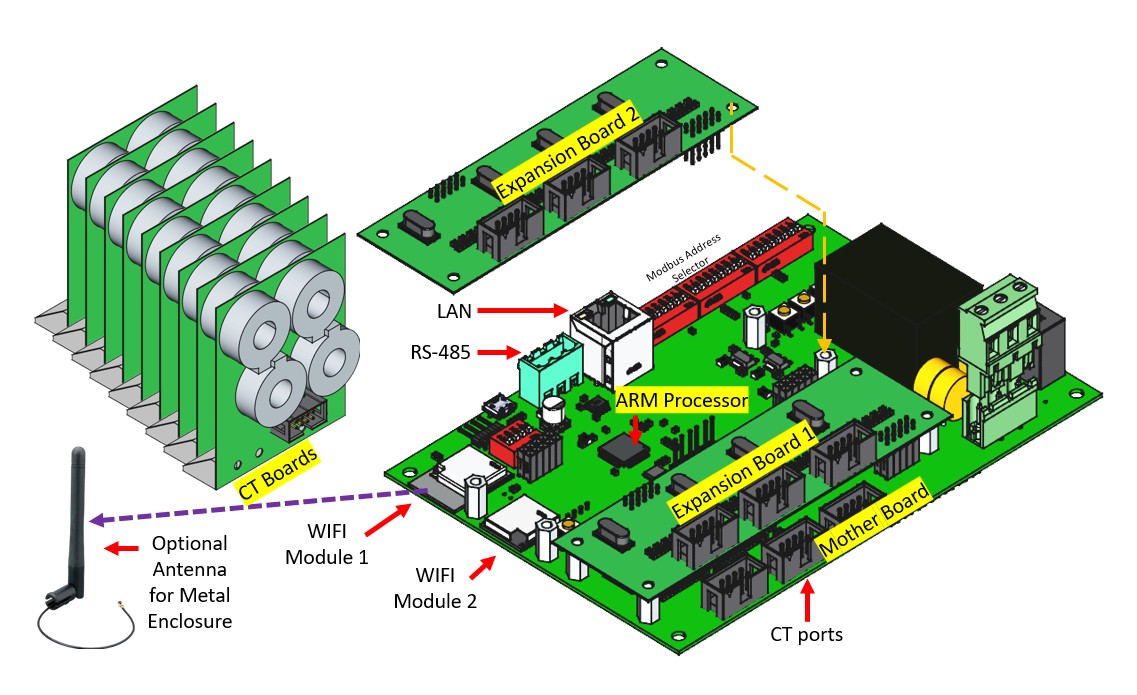
Current measurement is implemented using industrial iron-core current transformers (CT), providing galvanic isolation between the power system and the measurement circuitry.
90–300 Vac (L–N), 50/60 Hz (typical building/industrial mains monitoring).
−20°C to +70°C (typical industrial environment; extended range depends on configuration).
If you need a wider voltage range or harsher temperature specification, we can tailor the input and BOM selection.
Wi-Fi module or Ethernet (LAN) deployment options.
Modbus TCP for industrial integration. Secure transport options (TLS) can be implemented for security-conscious deployments.
Connect to cloud platforms such as Azure or Tuya ecosystem depending on deployment requirements and customer workflow.
A layered measurement pipeline—from sensing to waveform sampling, computation, communications, and cloud dashboards— designed for reliability and scalable deployment.
Single-phase / three-phase mains
Iron-core CT + voltage network
Conditioning & noise-aware design
Waveform acquisition for computation
Power & energy parameter computation
ARM9 Linux MPU or industrial MCU
Wi-Fi / Ethernet, Modbus TCP, TLS
Azure / Tuya / web reporting
Share your phase requirements (single/three-phase), channel count, communication preference (Wi-Fi/Ethernet), and integration needs (Modbus/Cloud). We can propose the right architecture and deployment approach.